
At Caring Friends, we understand that home organization and everyday household tasks can become harder to manage over time for aging parents and the family members who care about them. Here’s what to look for and how a little extra help can go a long way.
You stop by your dad’s house after work and notice the mail stacked on the kitchen table again. There are dishes in the sink from a couple of days ago, a basket of laundry sitting in the hallway, and the rug by the back door has started to curl at the corner. None of it is a crisis. But you know it adds up, and you’re already stretched thin.
If that sounds familiar, you’re not alone. Many of the families we talk with across Nebraska tell us the same thing: “I just need help. I can’t do it all.” A home that’s slowly getting harder to keep up with is one of the most common early signs that an aging parent could use some support, especially home organization assistance.
The good news is that a few practical changes, and the right kind of help, can make everyday life easier and safer for your senior parent and for you.
Why an Organized Home Matters More as We Age
An organized home isn’t about being picture-perfect. It’s about making the day easier and the house safer to move around in.
- Fewer trip hazards. Stacks of newspapers, cords across walkways, shoes by the bed and loose rugs are easy to stumble over, especially at night or for someone using a cane or walker.
- Less stress and confusion. When everyday things have a set place, it’s easier to find glasses, keys, the remote and the phone. That means less frustration for your parent and fewer “I can’t find it” calls for you.
- More independence. When the things your parent uses every day are within easy reach, they can keep doing more for themselves. For most older adults, that matters a lot.
- Peace of mind for you. Walking into a tidy, comfortable home lets you spend your visit being the daughter or son, not the cleaning crew.
For many older adults, home represents familiarity, comfort, and a lifetime of memories. Being able to remain in that space, surrounded by the things they know and love, can mean a great deal. For family members, knowing that their parent has a home that feels manageable and welcoming can ease some of the worry that comes with watching someone they love grow older. Sometimes, the smallest changes, like home organization, can make a big difference in helping everyone feel more at ease.
Signs Your Parent’s Home May Need Some Attention
Changes in a home usually happen slowly, so they’re easy to miss when you’re there often. Often, it’s not just the condition of the home that catches your attention, but the realization that a parent who once managed everything independently may now be finding everyday life a little more challenging. Those changes can be difficult to acknowledge, especially when you want to respect their independence while making sure they’re supported.
Keep an eye out for:
- Mail, bills or newspapers piling up unopened
- Laundry that isn’t getting done, or the same clothes worn several days in a row
- Expired food in the refrigerator or a pantry that’s nearly empty
- Dishes left in the sink or on the counter
- Clutter on stairs, in hallways or along the path to the bathroom
- Rooms that have quietly turned into storage
- A parent who seems overwhelmed, or a little embarrassed, about the state of the house
One sign on its own may not mean much. Several together are a good reason to start a gentle conversation. At Caring Friends, we encourage families to approach that conversation with patience and compassion. It doesn’t have to be about everything that needs to change, it could mean just some home organization needs to take place. It can simply be an opportunity to listen, understand what your parent is experiencing, and explore what kind of support might make life a little easier.
Practical Home Organization Tips for Older Adults
You don’t need to tackle the whole house in one weekend. It usually goes better if you don’t. Start small, and let your parent lead whenever you can.
Start with the paths they walk every day.
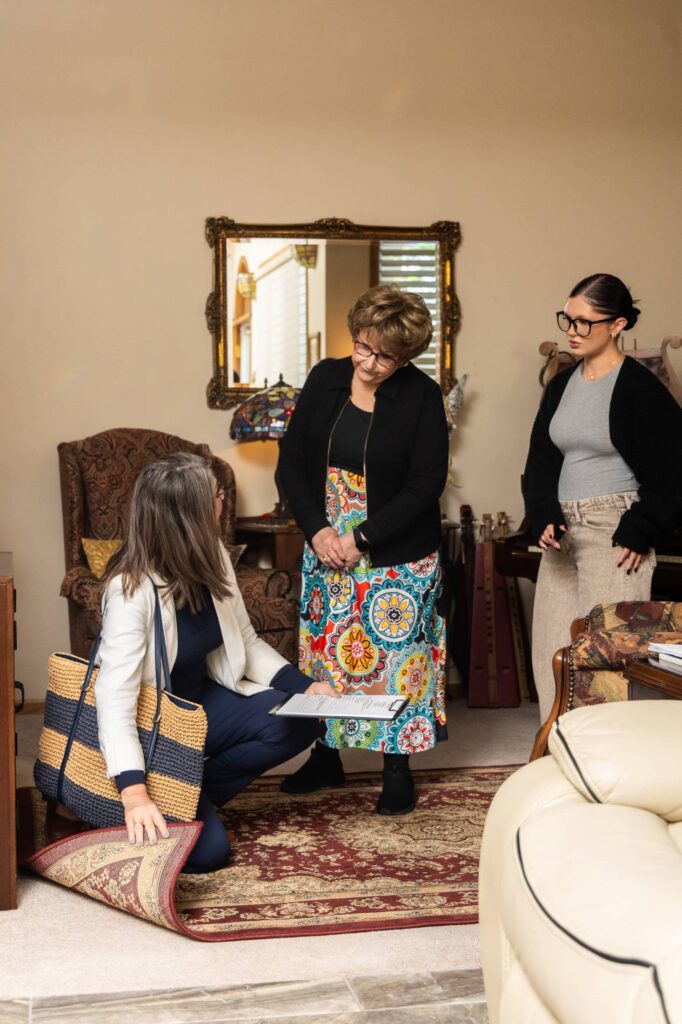
Walk the route from the bed to the bathroom, the kitchen and the front door. Clear anything on the floor, tuck cords along the wall, and remove or secure loose rugs. Night-lights along these paths help too.
Bring everyday items within reach.
Home organization doesn’t need to be complicated, it can be simple. Move the dishes, food and clothes your parent uses most to shelves between waist and shoulder height. That means less reaching, bending and climbing on step stools.
Set up a simple mail station.
One basket for incoming mail, one folder for bills, and one spot for important papers. Sit down together once a week to go through it.
Keep the kitchen simple.
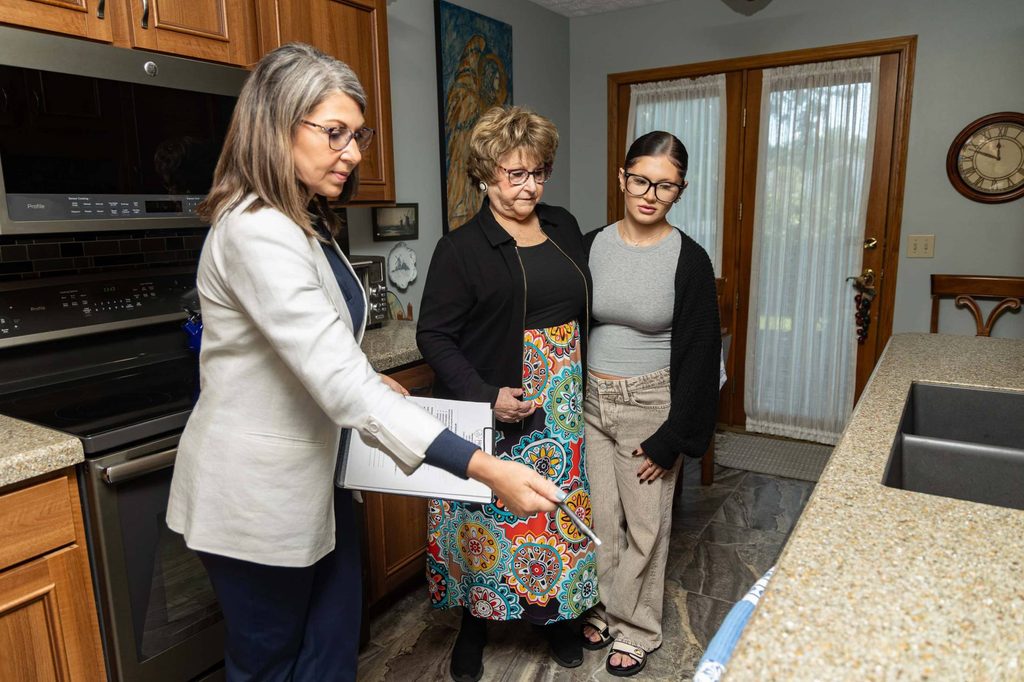
Clear out expired food, keep a short grocery list on the fridge, and leave only the items used every day on the counter.
Make the bedroom easy.
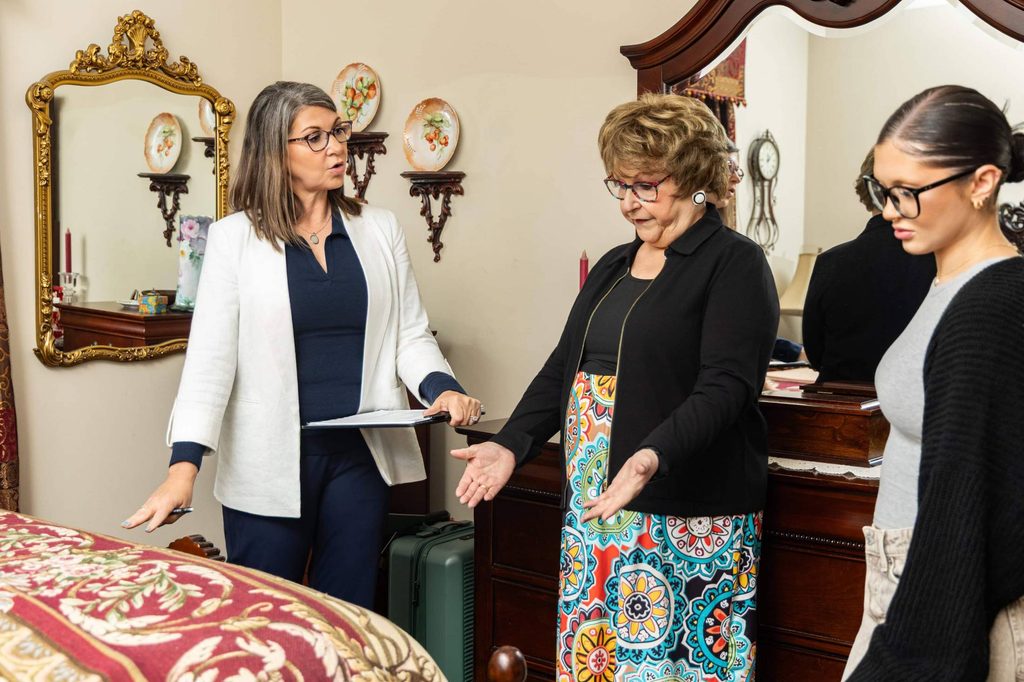
Keep a lamp and phone within reach of the bed. Pare the closet down to the clothes your parent actually wears, and swap seasonal clothes in and out.
Respect their things, and their feelings.
For many older adults, belongings hold decades of memories. Ask before you toss anything. Instead of talking about “getting rid of stuff,” talk about making the house easier to live in. Sorting one drawer or shelf at a time keeps it from feeling overwhelming.
Build a routine so it stays organized.
Organizing once is the easy part. Keeping it that way takes steady upkeep: dishes, laundry, trash, wiping counters, putting things back. That’s where regular help makes the biggest difference.
How Caring Friends Can Help Keep Things in Order
Caring Friends In-Home Care provides non-medical help at home for older adults. Our caregivers help with the everyday tasks that keep a house running and a parent comfortable, such as:
- Light housekeeping: dishes, wiping counters and tidying living areas
- Laundry and putting clothes away
- Home organization: helping keep everyday items organized, reducing clutter, and making frequently used spaces easier and safer to navigate.
- Keeping walkways clear and everyday items within reach
- Preparing meals and keeping the kitchen in order
- Help getting up in the morning, bedtime routines and personal care
Most of our visits are short, scheduled visits focused on specific tasks, including home organization, rather than around-the-clock care. Because visits happen on a regular schedule, small jobs get done before they turn into big ones. Many families tell us, “Mom looks forward to her visit.”
Each client’s care plan is personalized and guides our caregivers, so the help fits your parent’s real needs. If home organization is one of your parent’s needs, be sure to bring it up along with any other areas where they could use support. And we’ll be honest with you: home care isn’t the right fit for every family, and if we’re not, we’ll tell you and point you toward other options.
We’ve been helping families since 2018 and serve 30 Nebraska counties. Learn more about everything we offer on our Services page and Home Care page.
Frequently Asked Questions About Home Organization and In-Home Help
Is this the same as hiring a professional organizer or a deep-cleaning service?
Not quite. Our caregivers focus on the everyday tidying and upkeep that helps your parent live safely and comfortably, like dishes, laundry and keeping paths clear. Home organization with us, is ongoing help as part of regular visits, rather than a one-time overhaul.
Will a caregiver throw away my parent’s belongings?
No. Your parent’s home and things belong to them. Caregivers follow your parent’s wishes and your family’s guidance, and nothing should be thrown out without permission.
My mom insists she’s fine. How do I bring this up?
Start with what she wants: staying in her own home. Frame help as a way to make that easier, not as a sign she can’t manage. Pick one small, specific thing to start with, like help with laundry, and let her have a say in what happens next.
Can a more organized home help prevent falls?
Clearing clutter, securing rugs and keeping walkways open removes some common trip hazards. It can’t remove every risk, but it’s one of the simplest steps a family can take. If you have concerns about your parent’s health or balance, talk with their doctor.
How often would a caregiver come?
That depends on your parent’s needs, where they live and local staffing. Most of our visits are short, scheduled visits rather than all-day care. Your local supervisor will talk through options with you during a free in-home visit.
How much does in-home help cost?
Many families find home care costs less than they expected, especially for shorter visits. Cost depends on how many hours your parent needs. We work with private pay, Medicaid waiver and VA benefits, and we’ll walk you through what applies to your family.
Do you serve my area?
We serve South-Central and Southeast Nebraska, with offices in Lincoln and North Platte. Interested in learning more? Browse our Areas We Serve page for a map and list of specific areas to see if we can help where your parent lives.
You Don’t Have to Do It All Yourself
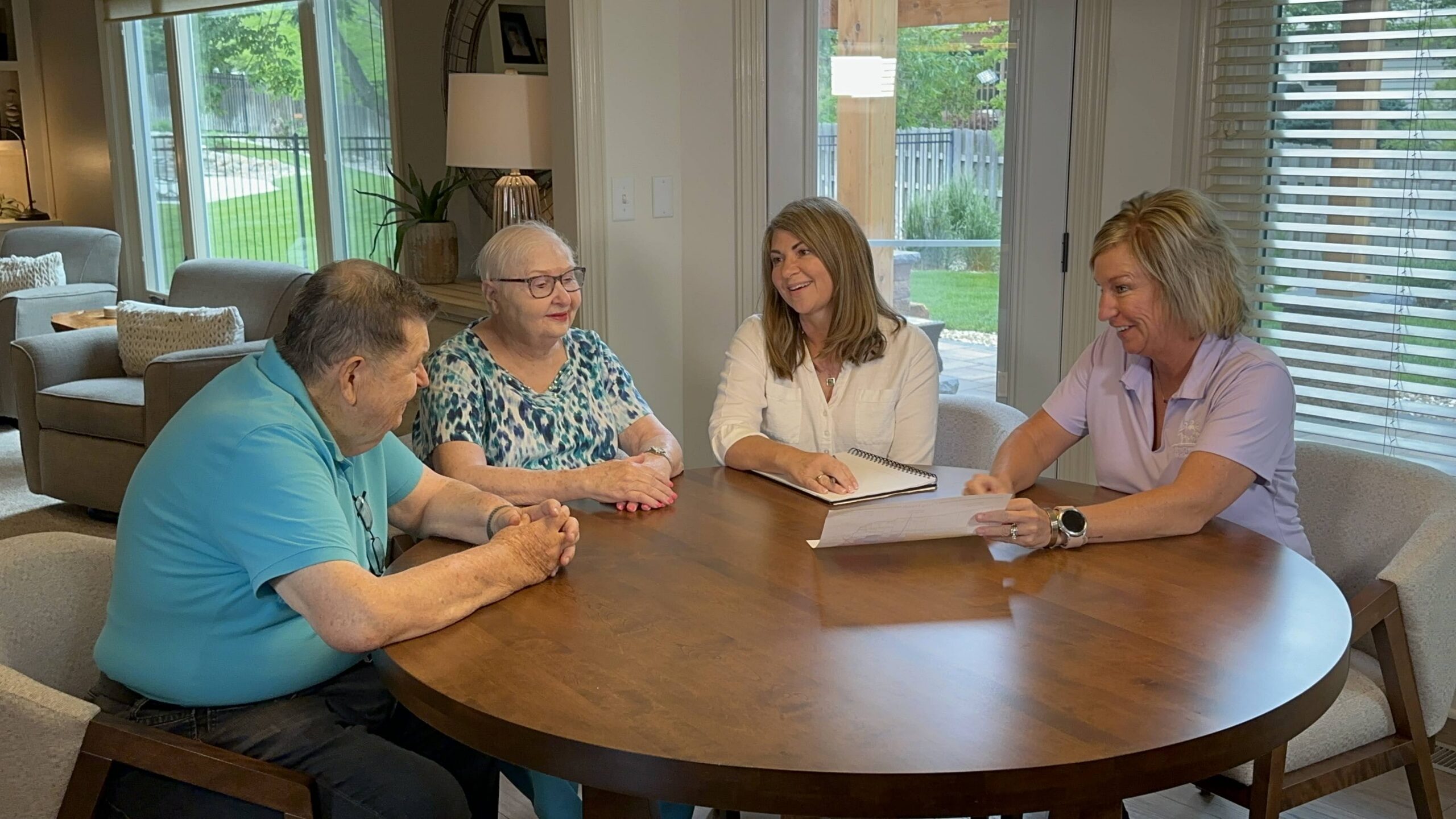
If keeping up with Mom’s or Dad’s house has started to feel like a second job, let’s talk. A local Caring Friends supervisor will come to your parent’s home for a free in-home visit to learn what’s going on, talk through what would help, and let you know honestly whether we’re the right fit.
Call our office at 402.207.1050 or fill out the Contact Us form on our website to schedule your free visit.